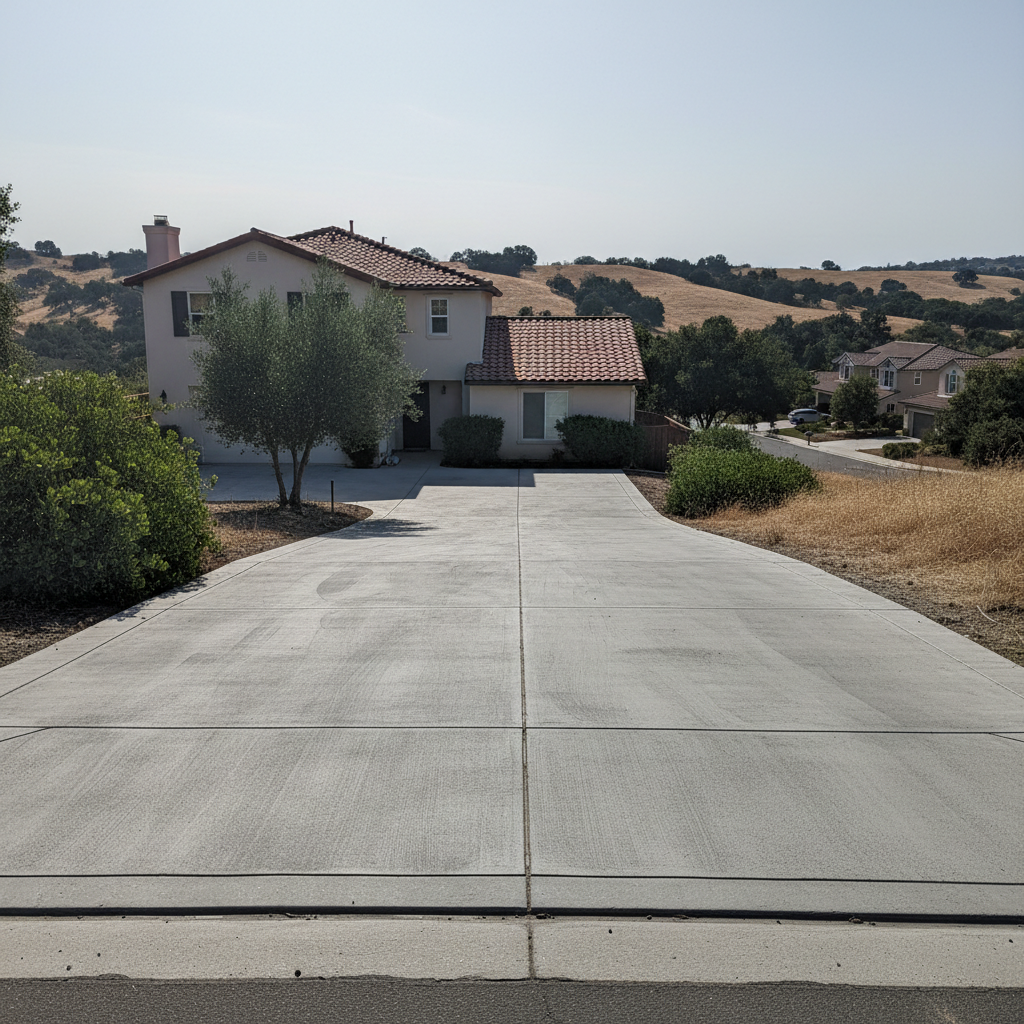
Inglewood sits on the old coastal plain of the Los Angeles basin, and most of the ground under these lots is sandy loam over layers of older alluvial fill, with pockets of heavier clay showing up near the old Centinela Creek and Ballona Creek drainage paths. That matters more than most homeowners expect. A contractor who pours the same slab here that they'd pour in the Inland Empire, without checking what's actually under your yard, is setting you up for cracking within a couple of winters.
This post isn't about picking one type of concrete job. Whether it's a driveway, a patio, a retaining wall, or a foundation repair, the questions you need to ask a contractor are mostly the same. Here's what actually separates a contractor worth hiring from one you should let walk back to their truck.
What the ground here does to a slab
Older neighborhoods like Morningside Park and Fairview Heights were mostly built out in the 1920s through the 1950s, and a lot of what's under those yards is decades of fill, old irrigation lines, and tree roots from mature ficus and sycamore trees that were planted along original parkways. A contractor working on one of these lots should dig a test hole or two before quoting, not just eyeball the yard and write a number.
Newer construction near the SoFi Stadium area and some of the infill lots closer to Market Street tend to have more consistent compacted base, since it's recent work, but even there the water table in parts of Inglewood runs higher than people assume because of the basin's low elevation. If a contractor doesn't ask about drainage, or doesn't check which way your yard slopes before pricing a patio or pool deck, that's worth noticing.
Reinforcement, thickness, and the numbers that matter
A patio slab generally runs 4 inches thick. A driveway that's going to carry a car and the occasional moving truck should be 5 to 6 inches, with rebar on a grid rather than just wire mesh laid loose on the base. Mesh that gets walked on during the pour and ends up sitting at the bottom of the slab instead of in the middle of it does almost nothing. Ask which one they're using and where the steel actually sits once the concrete goes in.
Control joints should go in within 24 hours of the pour, cut roughly every 8 to 10 feet depending on slab width. That's not optional finishing work, that's how you tell the concrete where to crack instead of letting it pick its own spot across the middle of your new driveway. If a contractor skips control joints to save time, you'll see the crack eventually, just not where you want it.
Cure time matters too. You can usually walk on a new slab after about 24 to 48 hours. Driving a car on it needs closer to 7 days. Full strength takes around 28 days. A contractor who tells you it's fine to park on a 2-day-old driveway is either in a hurry or doesn't know better, and neither is a good sign.
Licensing, insurance, and the Inglewood permit process
In California, a concrete contractor doing structural work like a foundation or retaining wall over a certain height needs a C-8 concrete contractor license through the CSLB, and you can look that license number up yourself in about thirty seconds. Ask for it before you ask for anything else.
Permits for driveways, slabs, retaining walls over 4 feet, and most structural concrete work go through the City of Inglewood's Building and Safety Division. If your property happens to sit in an unincorporated pocket near View Park-Windsor Hills, Ladera Heights, or Lennox, it'll go through LA County instead. Either way, inspections typically happen before the pour, to check the base, the forms, and the rebar placement, and sometimes again after. A contractor who tells you permits aren't necessary for a driveway or a retaining wall is either wrong or hoping you won't check. Skipping the permit might save a week now and cost you a lot more if you sell the house and the buyer's inspector flags unpermitted work.
HOAs aren't as common across older Inglewood neighborhoods as they are in some newer developments nearby, but if you're in a condo complex or one of the newer planned communities, check your HOA's rules on concrete color and finish before you fall in love with a stamped pattern that isn't on their approved list.
Questions worth asking before you sign anything
- What's the concrete mix strength, in PSI, and is that written into the contract?
- Who pulls the permit, you or them, and is that cost in the quote or separate?
- What's the base prep, how many inches of compacted aggregate before the pour?
- How do they handle a hot pour in August versus a wet one in February, since Inglewood's rainy season generally runs December through March?
- What's the warranty on cracking, and does it cover settlement cracks or only workmanship defects?
A contractor who answers these without hesitation has done this enough times to know the answers cold. One who gets vague or changes the subject is telling you something too.
Red flags that mean you walk away
A bid that comes in dramatically lower than two or three others usually means something's getting cut, whether that's base depth, rebar, or the number of guys actually sent to do the work. Concrete isn't a product where you find a hidden discount, the material and labor costs are pretty well known across the trade.
Cash-only deals with no written contract are a bad sign on any job over a few hundred dollars. No license number, no insurance certificate, or a business that can't tell you where else in the South Bay they've worked recently, all worth walking from. So is a contractor willing to pour during a storm warning or when rain is forecast within the cure window, since water getting into fresh concrete before it sets weakens the surface and can cause scaling later.
Also watch for anyone who won't put the PSI rating, slab thickness, and reinforcement type in writing. A verbal promise about quality doesn't hold up when the driveway starts spalling in year three.
What a good quote actually looks like
A solid written estimate names the square footage, the slab thickness, the PSI strength of the mix, whether it's rebar or mesh and where it sits, the base prep depth, expansion and control joint spacing, and a cure time before you can drive or walk on it. It should also spell out who's responsible for the permit and who's on the hook if an inspection fails.
That's the same list whether you're getting a walkway poured, a pool deck resurfaced, or a full slab foundation put in for an addition. The scope changes, the fundamentals don't. If you want to see how we handle that process from the first site visit through the final inspection, take a look at Cornerstone Concrete Company, and bring your questions. A contractor who's done the work doesn't mind being asked hard ones.